Nonverbal autism is a form of autism spectrum disorder that impacts a child’s ability to use oral expression as their primary means of communication. The exact cause of nonverbal autism is unknown, but it is likely a combination of genetic, neurological, and environmental factors.
This blog dives into ways to help nonverbal children express their thoughts and interests.
Nonverbal children have a lot to say!
Speech tablets
Speech therapists deploy a range of strategies to help nonverbal autistic children try to develop oral communication skills, learn assistive technology and function more independently.
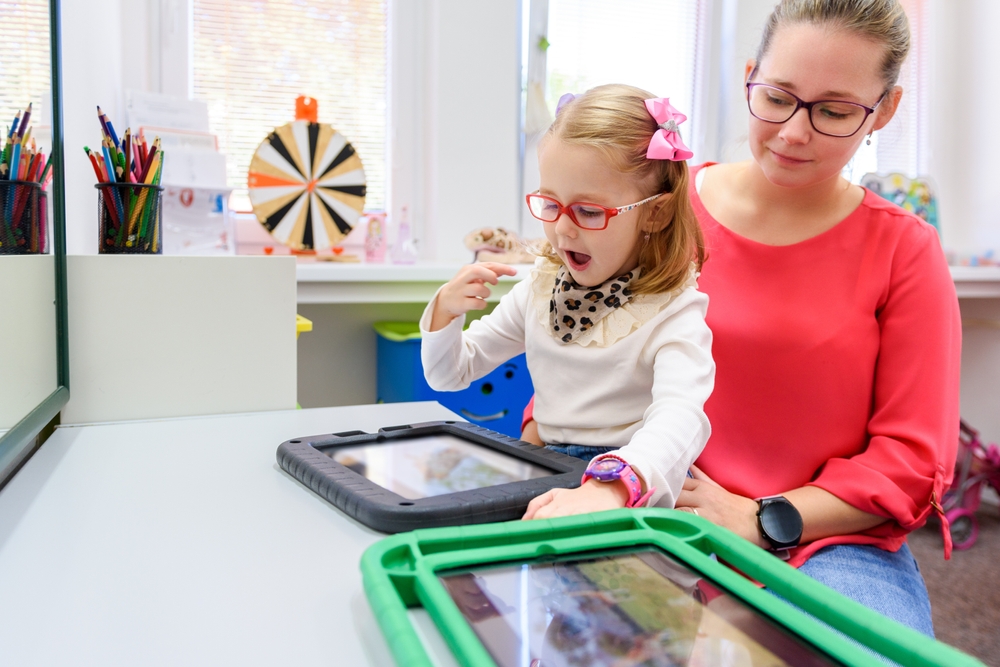
Augmentative and Alternate Communication (AAC) describes any means of communication, aside from traditional speech, which allows a child to use language. Modern devices are iPads that have emoji’s, or icons, with sound. This empowering technology gives non-speaking users a voice by helping them communicate and possibly even to speak.
When learning how to use an AAC device, a child typically starts with nouns, pressing icons to request a crayon, toy or snack. Through support from speech therapists, a child might start to learn grammar and descriptive language such as “I want a purple crayon.” Speech tablets include emojis for letters, numbers, shapes and thousands of educational points.
Children who are nonspeaking may exhibit aggressive behaviors out of frustration from their inability to communicate. AAC’s are one way to help a child overcome the frustration
Tips for using speech tablets
Speech therapists program the device based on a child’s developmental goals. The tablets are designed for ease of use and have a strap for a child to wear. Best practices include:
- Teaching the child how to use the device by keeping it simple
- Starting with a few emoji’s that the child might particularly enjoy
- Making it fun and interactive!
- Giving the child what they request on the tablet as positive reinforcement
- Increasing access to additional icons over time to build vocabulary
Presume competence
Presuming competence is a positive approach to interacting with children with autism that emphasizes their strengths, abilities, and potential. It involves assuming they are capable of understanding, communicating, and learning, regardless of their of support needs.
When in the presence of children who are nonverbal, it is important to presume competence. This means speaking as if the child is understanding because they are often absorbing the content even if they are not participating in the conversation.
Conclusions
Traditional cues and technological advances help nonverbal children connect with family, friends, school, and other aspects of life. As educators, we have a responsibility to help them tap into all resources.
